安全支付 · Visa、PayPal 等方式使用优惠码“AD”享 15% 折扣
Education

Tattoo Cartridge Needle Sizes Guide

A practical cartridge needle guide for tattoo artists comparing liners, shaders, magnums, taper, diameter, and studio inventory planning.

Audersigt 团队Jun 1, 20264 min read
Key takeaway

A practical cartridge needle guide for tattoo artists comparing liners, shaders, magnums, taper, diameter, and studio inventory planning.

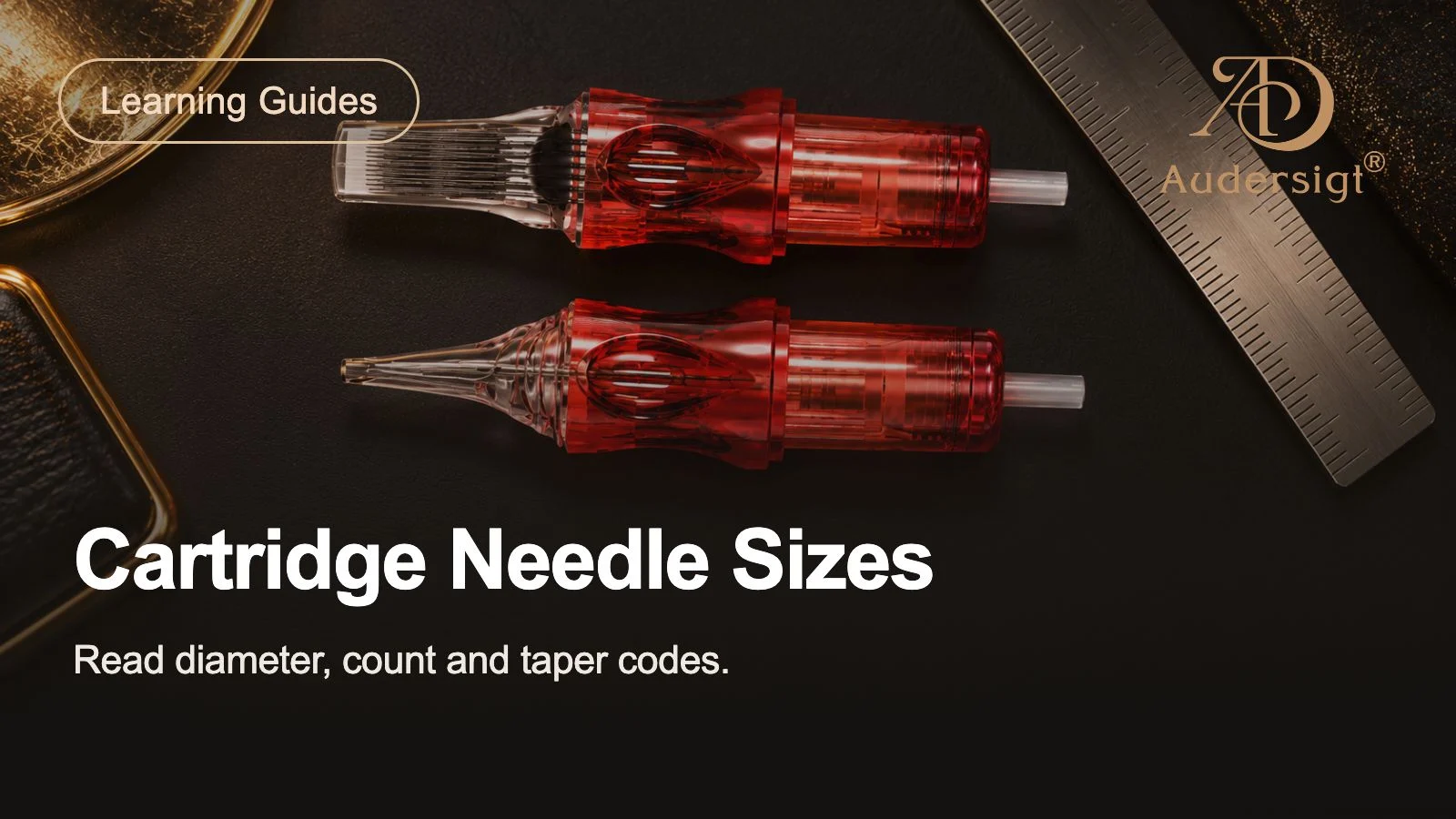
Tattoo cartridge labels can look simple, but every part of the code affects how the needle behaves. Diameter, grouping, taper, and configuration all influence line weight, pigment flow, skin impact, and speed. For a professional studio, understanding cartridge sizes is also an inventory issue. Stocking the right mix prevents delays, reduces waste, and helps artists keep a consistent workflow.

This guide covers the common cartridge families used in modern tattooing: round liners, round shaders, magnums, and curved magnums. It also explains how to think about diameter, taper, and buying quantities.

Round liner cartridges

Round liners are grouped tightly so the needle points work together as a line-making tool. They are used for outlines, scripts, detail work, geometric designs, and controlled texture. Common labels include RL for round liner, followed by the needle count.

A 3RL or 5RL is useful for fine work and small details. A 7RL or 9RL can create more visible lines with fewer passes. Larger liners can be used for bold traditional work or strong graphic designs. The right choice depends on the artist's style, hand speed, and how much line weight the design needs.

Round shader cartridges

Round shaders, often labeled RS, are arranged more openly than liners. They can be used for small shading areas, soft fills, color work in tight spaces, and some textured effects. They do not create the same crisp line as a tight liner, but they can be useful when an artist wants a softer edge.

Studios often keep a smaller range of RS sizes than RL sizes, because many shading tasks are handled by magnums. Still, RS cartridges are valuable for small tattoos, transitions, and areas where a magnum is too wide.

Magnum cartridges

Magnum cartridges, often labeled M1, arrange needles in a wider formation. They are built for shading, blending, and color packing over larger areas. Because they cover more skin per pass, they can be efficient when used correctly.

Magnums require steady hand control and good stretch. Too much pressure or repeated passes can irritate skin quickly. Artists should match magnum size to the area they are working on. A small magnum helps on compact designs, while a larger grouping can make big shading areas more efficient.

Curved magnums and soft edge magnums

Curved magnums are often labeled RM or soft edge magnum. The curved arrangement makes the edge of the grouping less harsh, which can help with smooth gradients and softer transitions. Many artists prefer RM cartridges for black and grey, realism, portraits, and color blends.

The curve does not remove the need for technique. Angle, stretch, speed, and pigment load still matter. But for many artists, RM cartridges are more forgiving than flat magnums when building soft transitions.

Diameter and taper

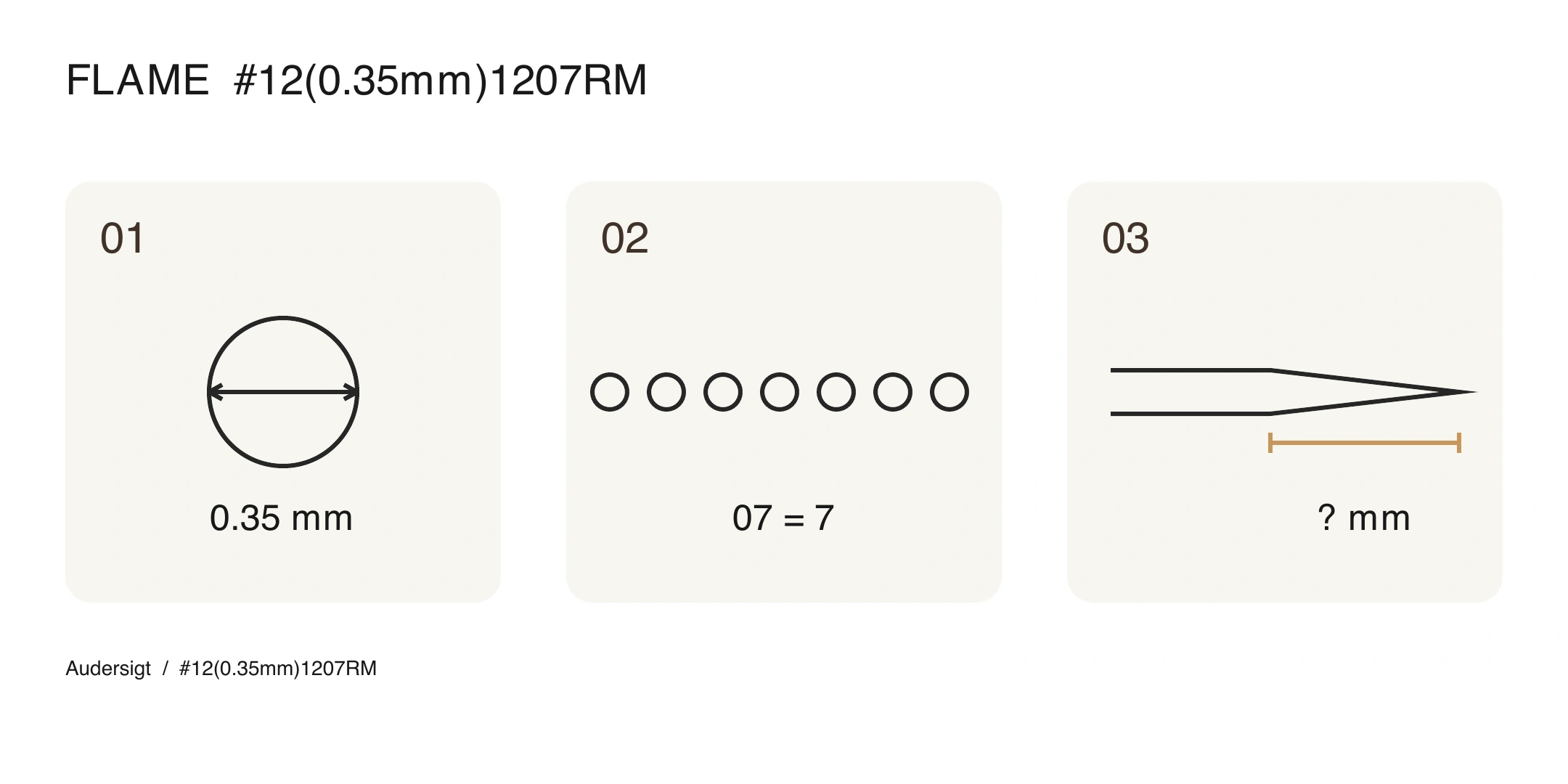
Needle diameter changes pigment flow and skin feel. Smaller diameters can feel more precise and may be useful for fine lines or delicate shading. Larger diameters can move more pigment and are often used for bolder work.

Taper describes how long the needle point narrows before the tip. Long taper needles can offer more control and a finer feel. Shorter taper needles may deliver pigment more quickly. Manufacturers use slightly different naming, so compare real performance rather than relying only on labels.

Hygiene and consistency

For professional use, cartridges should be sterile, individually packaged, and consistent from box to box. Check membrane stability, tip clarity, solder quality, and whether the cartridge seats securely in the grip. A cartridge that wobbles or has poor membrane tension can make even a good machine feel unreliable.

Studios should store cartridges by configuration and size so artists can find them quickly. Mixing sizes in unlabeled drawers causes mistakes during busy sessions. A simple inventory list for RL, RS, M1, and RM sizes can save time and reduce emergency orders.

Starter inventory for studios

A practical starter stock might include 3RL, 5RL, 7RL, 9RL, 5RS, 7RS, 9M1, 11M1, 13M1, 9RM, 11RM, and 13RM. Fine line specialists may need more small liners. Color artists may use more magnums. Traditional artists may keep larger liners and shaders available.

Track which sizes are used weekly. Reorder based on actual consumption instead of guessing. If several artists share supplies, separate personal preference sizes from common station stock.

Matching cartridges with machines

Not every machine feels the same with every cartridge. Large magnums need enough torque. Fine liners need stable, precise response. If a cartridge feels inconsistent, test another grouping, check voltage, and confirm the machine stroke matches the task.

Audersigt cartridge categories are organized so artists can compare liner, shader, magnum, and mixed-pack options. Use product specs and pack details to build a cartridge inventory that matches real studio work.

Helpful next step

Build a cleaner tattoo setup

返回博客分享这篇文章