Moon Tattoo Designs: 3 Original Ideas and Reference Downloads
Audersigt Team·6 min read
A moon tattoo can begin with a single open curve, a row of changing shapes or a crescent surrounded by leaves. Start by deciding which silhouette you want to recognize first. Then compare the direction, spacing and level of detail before discussing placement with your artist.
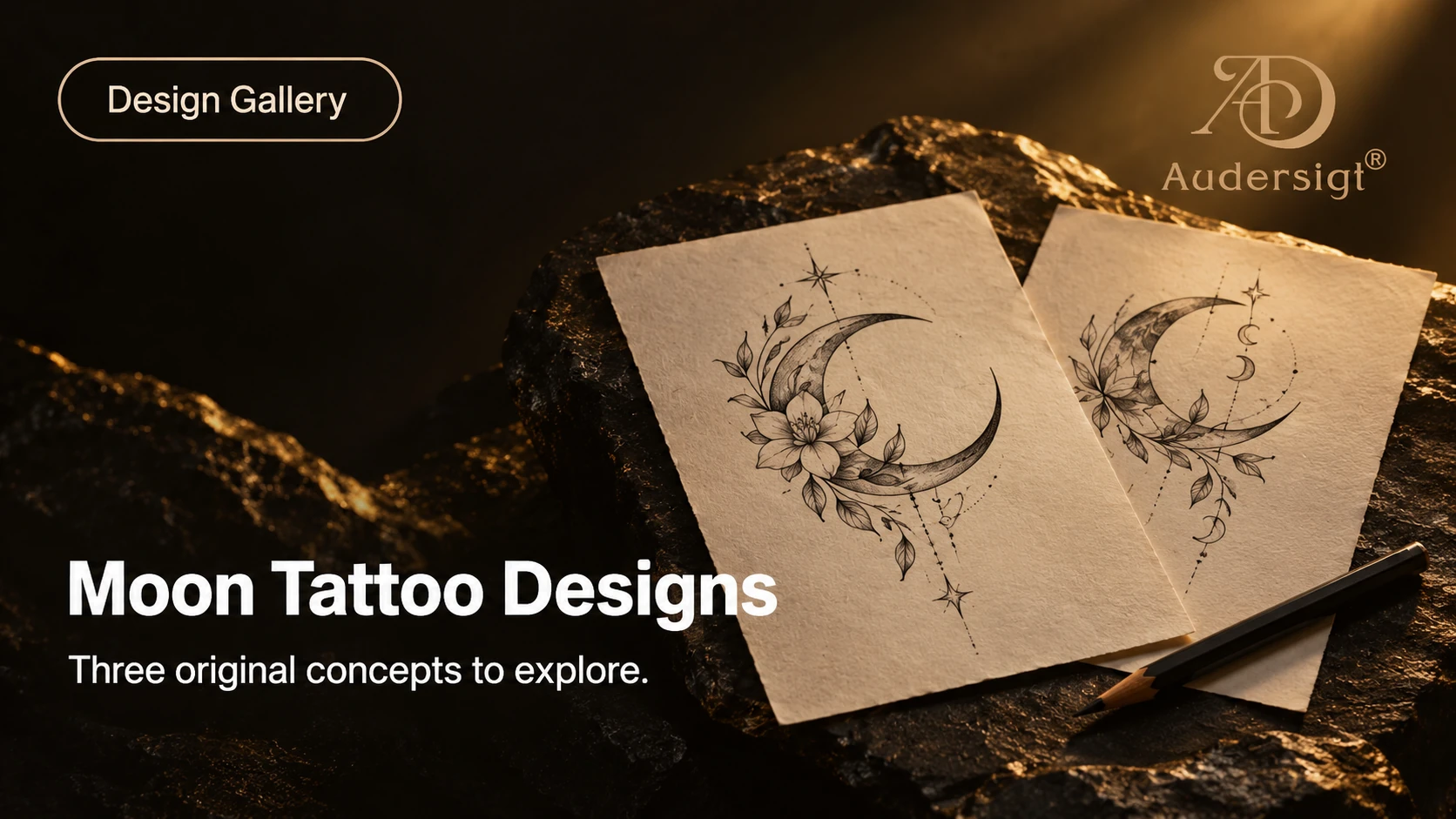
This gallery contains three original AI-assisted design references prepared for Audersigt on October 27, 2026. They are illustrations on white backgrounds, not photographs of tattoos, artist commissions or healed results. The black-and-gold cover is also AI-assisted editorial artwork; its decorative scene is separate from the three downloadable designs below.
Three moon tattoo design directions
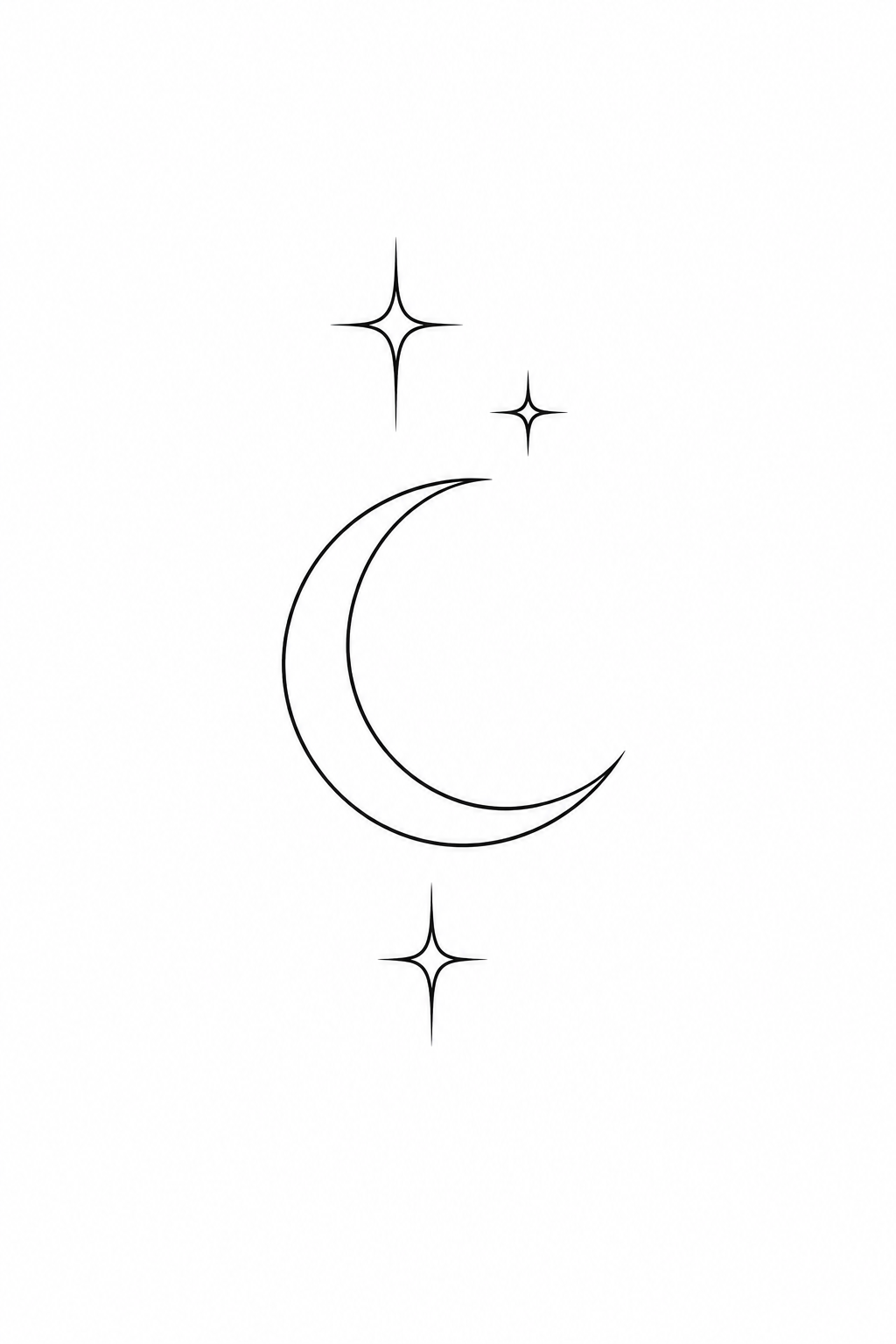
Crescent moon with three stars
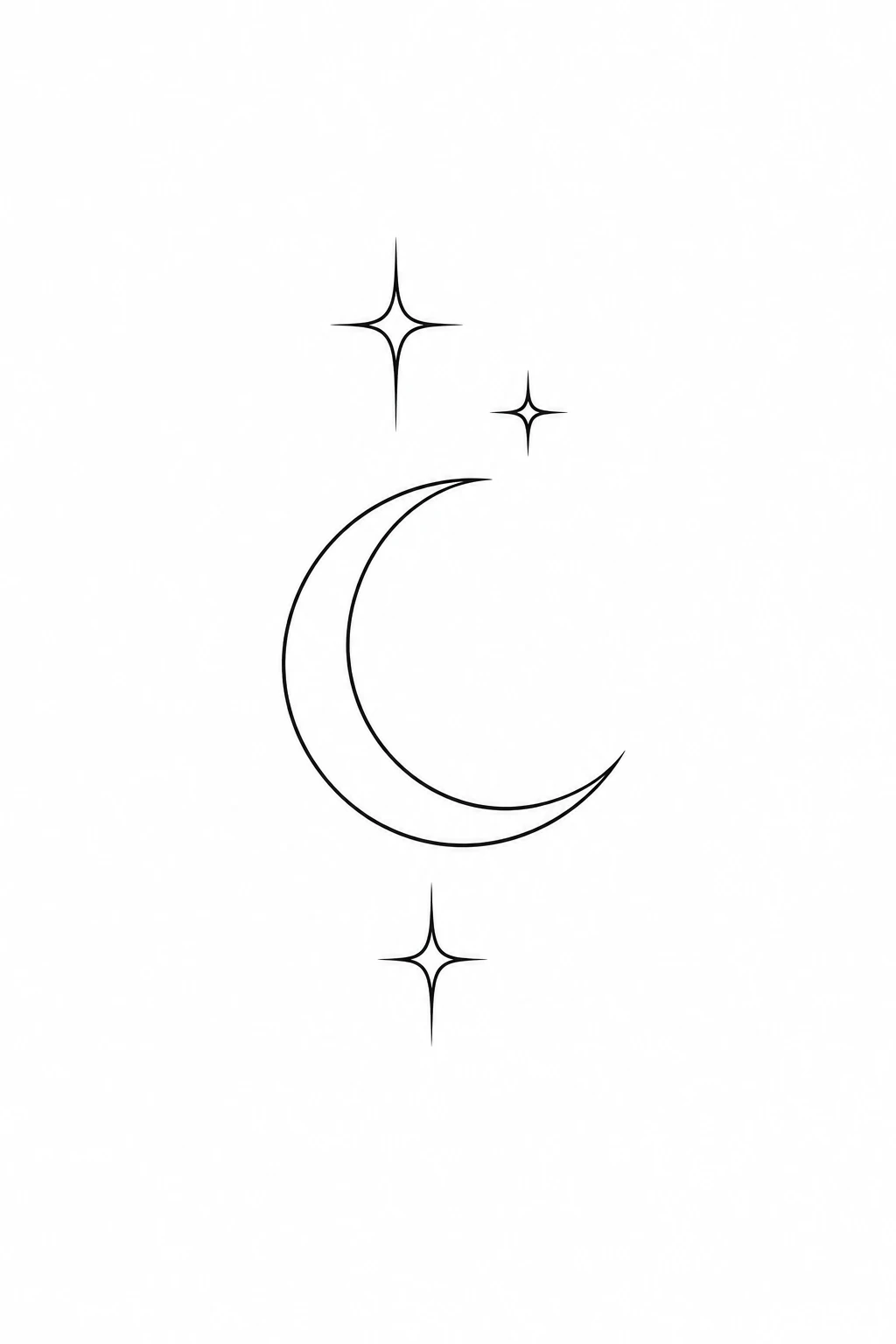
The crescent provides one clear focal shape. Two stars sit above it at different heights, while the third extends the composition downward. The open center gives this version more empty space than the botanical design. It is a useful starting reference when you want a simple moon-and-stars composition without a dense background.
The stars are intentionally different sizes. Before choosing a final drawing, compare whether you prefer that uneven rhythm or a more regular arrangement. Removing a star, shortening a point or changing the crescent's direction creates a different composition; ask your artist to redraw it as a coherent design rather than adding unrelated symbols around the edge.
Open the original crescent-and-stars PNG
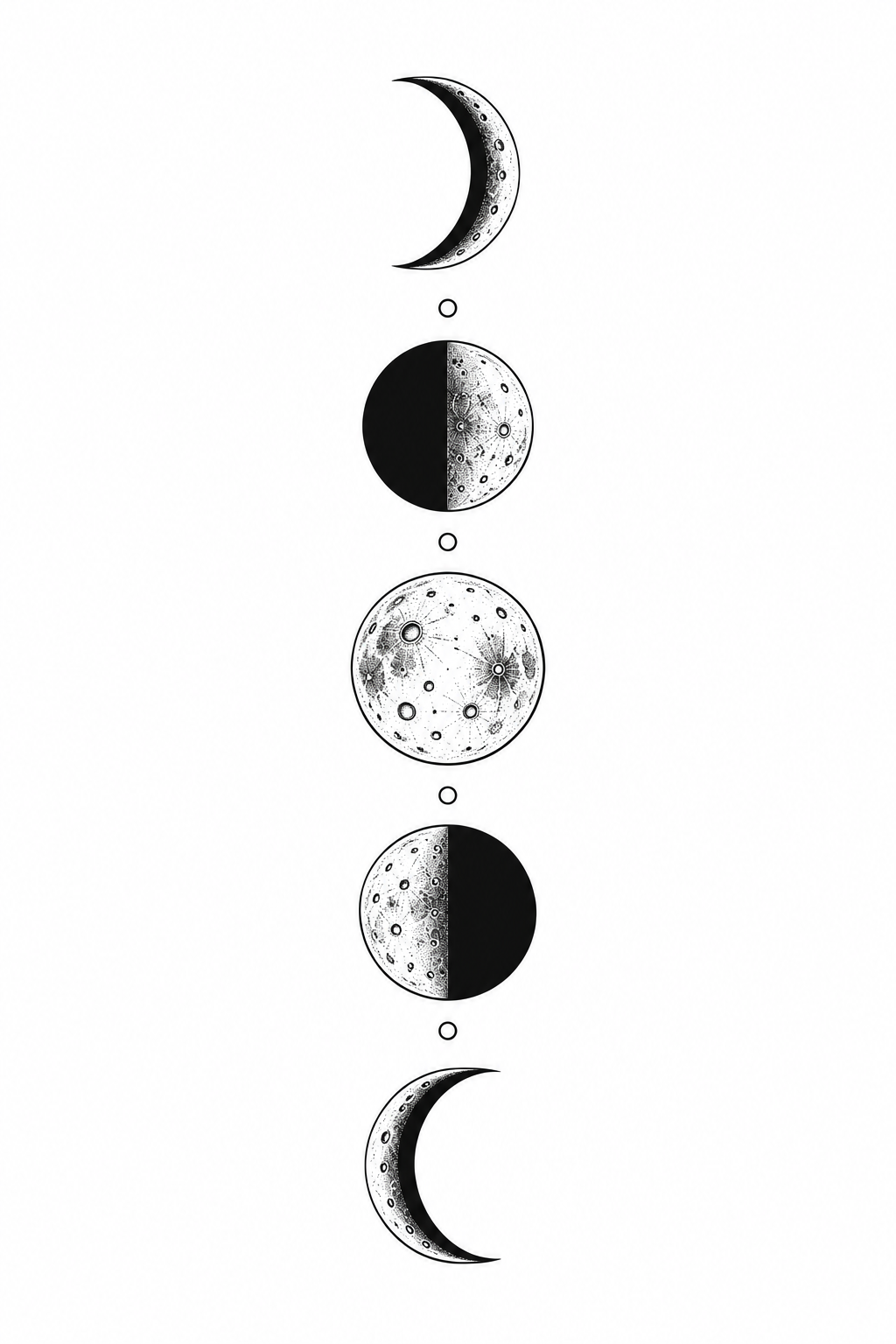
A vertical sequence of five lunar shapes
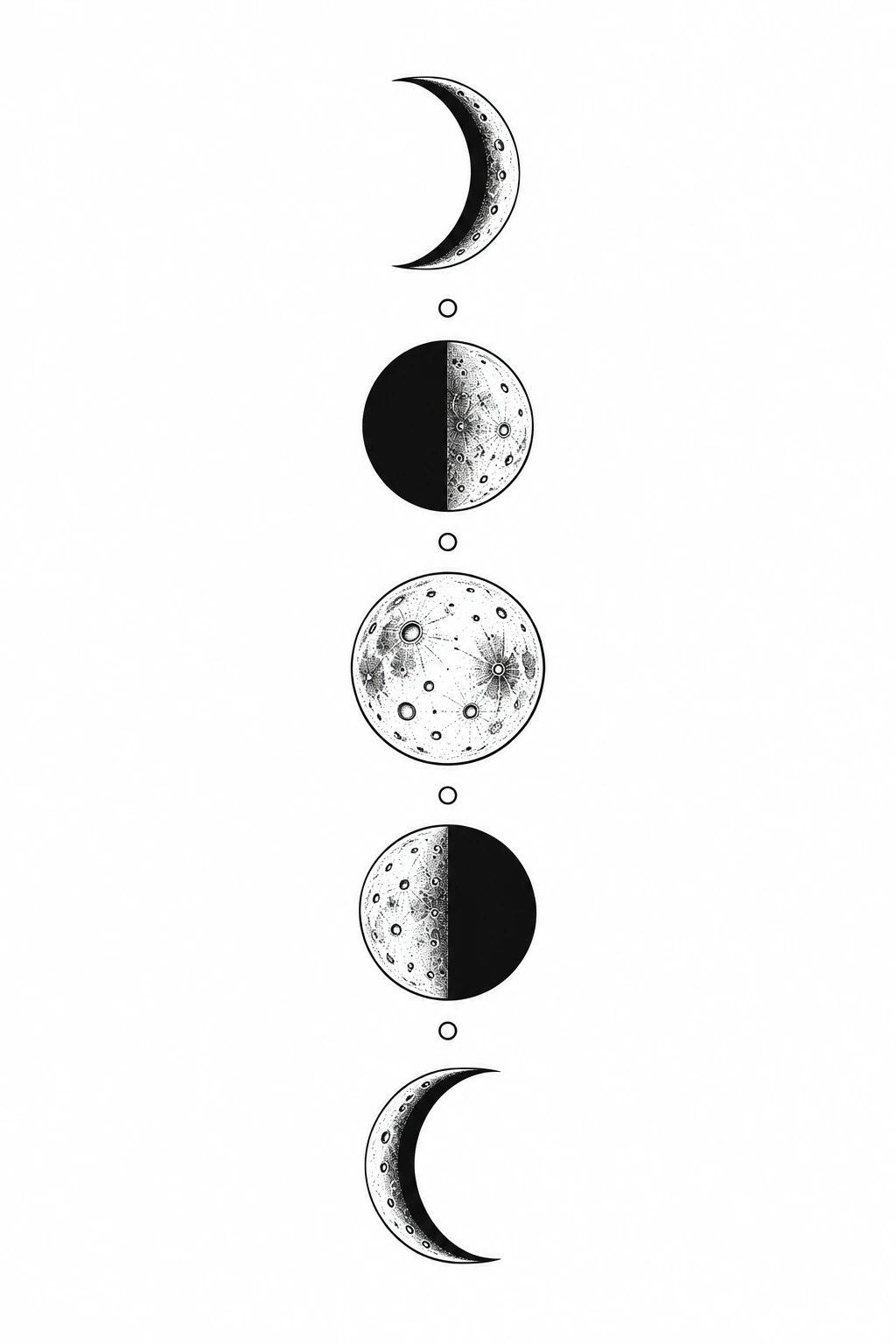
This design uses repetition: a full circle sits between two half circles and two opposing crescents. Small open circles separate the main shapes. The result has a longer, narrower outline than the other two references, with the textured center acting as the visual anchor.
It is a decorative sequence inspired by lunar phases, not a complete astronomical chart or a record of the Moon on a particular date. If a real date or phase matters to your idea, verify it independently before finalizing the design. NASA's explanation of Moon phases provides a factual starting point; the decorative orientation and crater marks here are artistic choices.
Compare the spacing between shapes as well as the shapes themselves. Bringing the circles closer makes the group feel more compact; wider gaps give each part more separation. The downloaded artwork is a reference for that conversation, not a fixed-size transfer template.
Open the original five-shape moon PNG
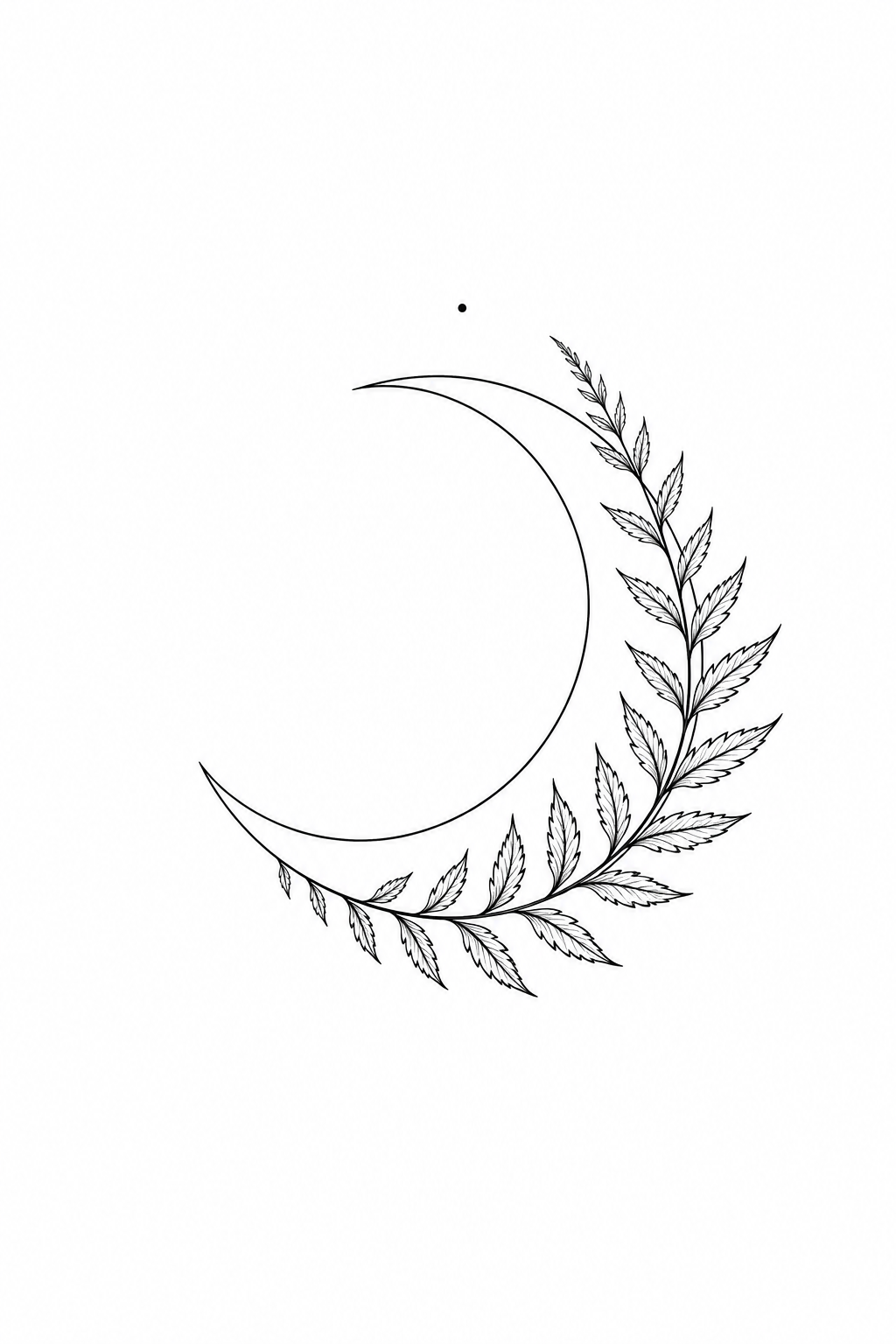
Crescent with a curved leafy branch
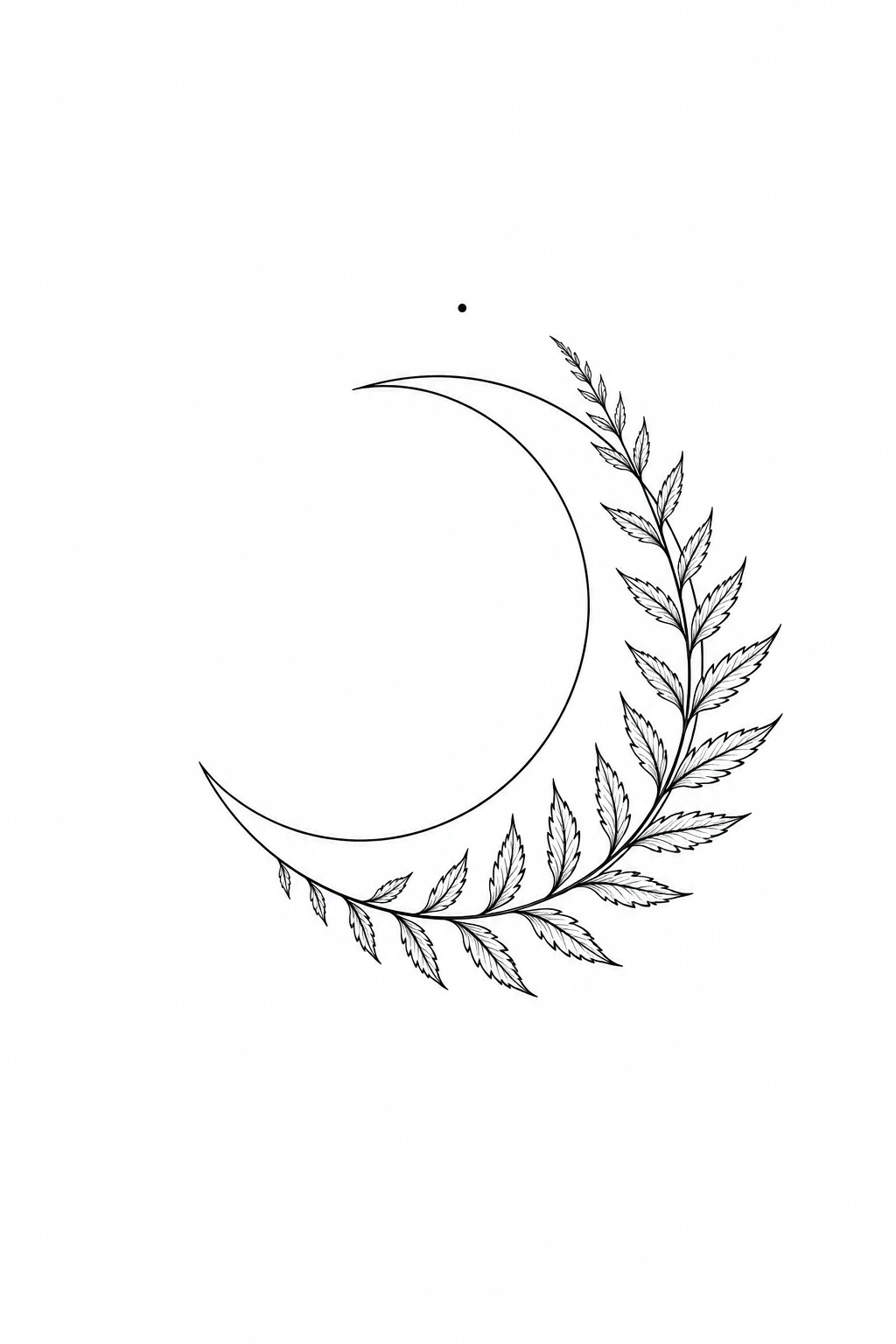
The leafy branch follows the crescent's outside edge and adds a second direction to the drawing. Unlike the open moon-and-stars design, this version places much of its detail around the lower curve. The small dot above gives the composition a quiet counterpoint without becoming a second large subject.
The leaves are decorative and are not presented as a botanical identification. Compare this reference with the floral tattoo gallery if you want to replace the branch with a flower or develop a wider composition. Decide which element should lead: a moon with a plant accent, or a plant design that happens to contain a moon.
Open the original botanical moon PNG
Compare the whole silhouette
| Reference | Visual emphasis | A useful question for your artist |
|---|---|---|
| Crescent and stars | Open space and a small group of distinct shapes | Should the stars remain separate or move closer to the crescent? |
| Five lunar shapes | A narrow vertical rhythm with a central circle | How much space does each shape need in the final composition? |
| Botanical crescent | A sweeping curve with more detail around its edge | Which leaf details should remain at the proposed size? |
Look at the designs as small thumbnails before inspecting their details. If the outline you like disappears when reduced, consider a simpler version or a different size. This is a visual comparison exercise, not a promise about how a tattoo will age. The final drawing, line spacing and placement need an artist's assessment.
Size, direction and placement
Print a paper reference at the approximate size you have in mind, then compare a second, larger version. Mark the outer dimensions on the sheet so the artist knows what you are proposing. The supplied PDF fits each design to a reference page; it does not establish a suitable tattoo size or a fixed anatomical scale.
Check the direction you prefer before discussing transfer. The moon-and-stars crescent opens right in the artwork; the botanical crescent opens left. A mirror image changes how the branch and open space relate to the rest of a composition. Use the drawing to explain your preference and let the artist prepare the final orientation.
For a long composition, discuss whether the line of shapes should follow the direction of the intended area or sit across it. For a compact composition, check how the moon relates to nearby tattoos, clothing edges or other elements you want to include. There is no universal placement that fits every person or every version of these drawings.
Meaning without a fixed script
You may choose a moon because it connects with a personal memory, the night sky or the visual shape itself. You do not need to attach a universal meaning to every crescent or star. If the design incorporates a cultural or religious symbol, research that specific symbol and discuss its context instead of assuming all moon imagery means the same thing.
A short brief helps: name the main subject, the details you want to keep, the direction you prefer and the feeling you want the composition to convey. Keep references that explain those decisions together. A focused set of references is easier to discuss than a collection of unrelated designs.
Download and prepare your reference
Download the three-page moon reference PDF in English
Download the three-page moon reference PDF in Spanish
The PNG links preserve the original generated illustrations. The page uses separate WebP previews for browsing. The PDF places one illustration on each page with its name and source note. These are design references for personal consultation, not ready-to-use stencils or instructions for applying a tattoo.
- Choose the design whose overall shape you prefer.
- Note the proposed size, direction and details you would like changed.
- Bring the reference and your notes to your artist.
- Ask for a final drawing and an assessment of the intended placement.
- Keep medical, aftercare and application questions separate from the design reference.
Source and use
These AI-assisted illustrations were prepared for Audersigt for personal reference and discussion with an artist. They are not claimed as the work of a named tattoo artist, an exclusive commission or a real tattoo result. For commercial reproduction or licensing enquiries, contact Audersigt. No exclusivity is promised.
For another simple linework direction, explore the fine-line tattoo gallery. Artists preparing the equipment side of a design can use the cartridge size guide and cartridge collection to review terminology and current products; the gallery itself does not prescribe a needle or machine setting.
Find your next tattoo setup
Shop productsRelated Articles
Best Tattoo Stencil Printers: X6 vs T08FD
Compare the Audersigt X6 and T08FD tattoo stencil printers by paper support, connectivity, battery, controls, size, and real studio workflow.
Best Wireless Tattoo Machines: A Specification-Led Studio Guide
Compare Audersigt D2 Pro, KT088, KT108 and MAX PRO by documented stroke, battery and grip configurations, with a practical buying checklist.

Tattoo Machine Stroke Guide
Learn how tattoo machine stroke length affects lining, shading, color packing, needle control, and daily studio setup decisions.