Black and Grey Tattoo Design Guide: Ideas and Needle Selection
Audersigt Team·4 min read
A Black and Grey design is readable when its light and dark structure is clear. A portrait-inspired bust, rose and geometric volume study offer three ways to examine that structure. These are drawings; none documents skin behaviour, healing or a real person’s tattoo.
What makes this Black and Grey design readable?
Decide where the darkest accents belong and which light areas must remain open. Broad transitions, narrow shadows and small descriptive lines are separate tasks. A useful value plan should still explain the form when fine texture is removed.
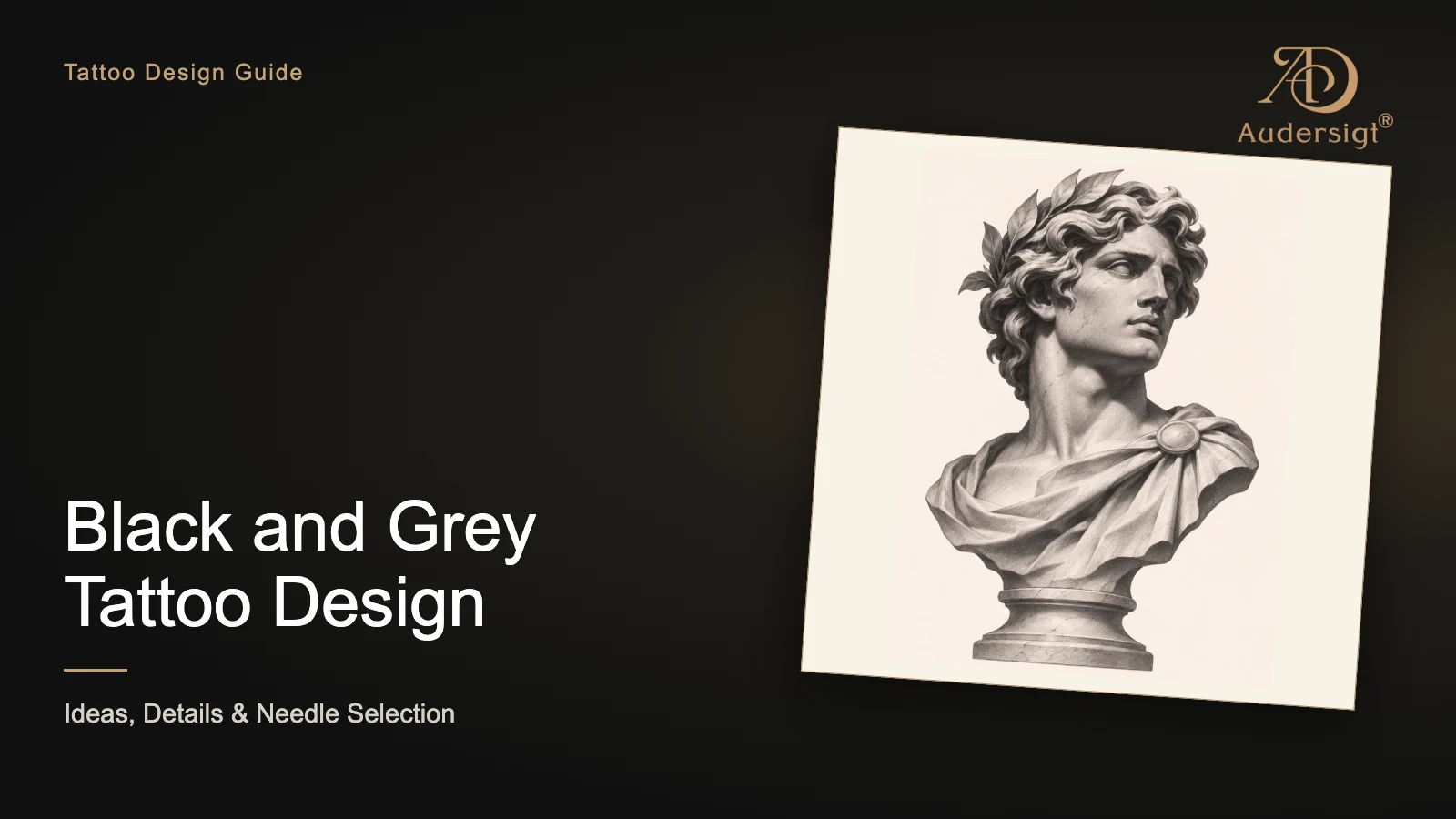
Invented sculptural bust
The face relies on a few larger value planes before small facial details. Keep the light side and background separate, and avoid filling every facial boundary with an equally dark contour.
Mark broad cheek and neck transitions, narrow eye-area shadows and small contour details. RM may be worth comparing for broad transitions; local shading may require another size or configuration. The available area and complete specifications decide the shortlist.

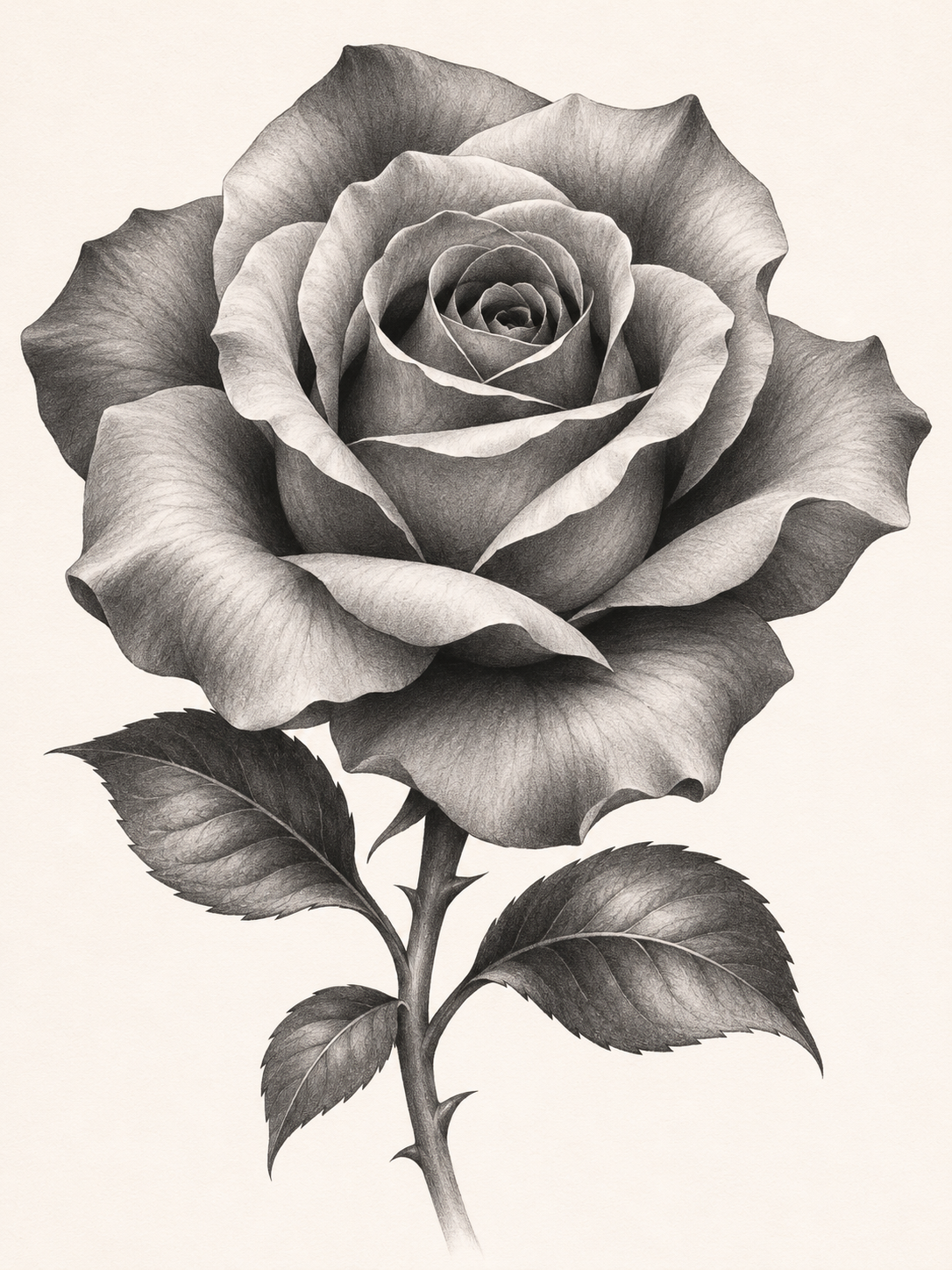
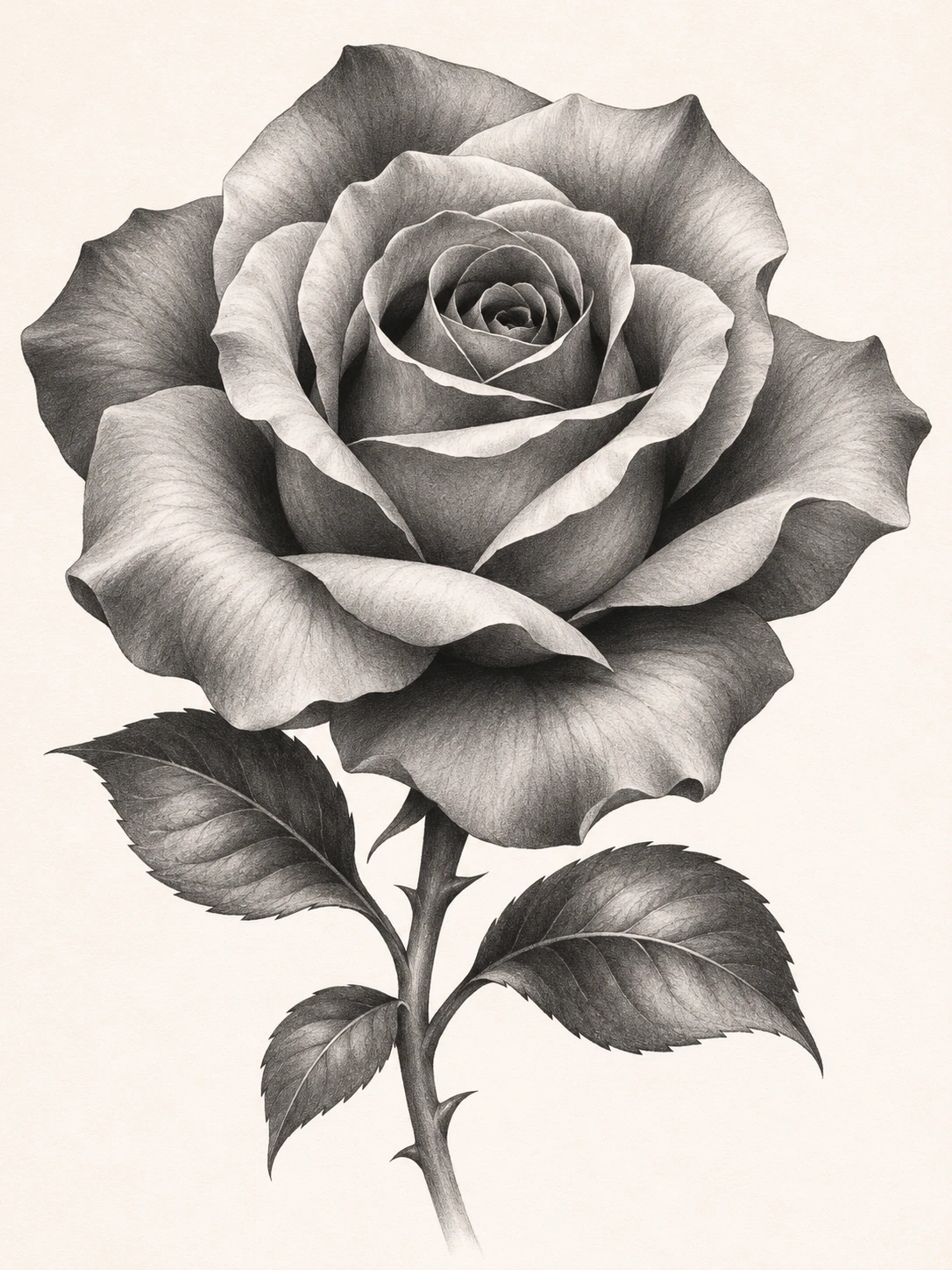
Gray rose
Overlapping petals create light and shadow boundaries. The most important boundaries are the ones that explain which petal is in front, not every tiny surface variation.
Map broad petal gradients separately from small creases. Compare smaller and larger groups within the same configuration before changing configuration as well. There is no single rose-shading needle size.
Geometric volume study
Simple solids make the value structure explicit. A plane change should be distinguishable from a gradual curved transition, with white space keeping the objects apart.
Compare a broad gradient area with a narrow edge-adjacent shadow. Record the intended boundary and access requirements, then review M1/RM specifications. This is design analysis, not evidence that one edge shape always creates a softer result.

Turn the design analysis into a complete specification
A curved magnum is not a guarantee of a soft gradient. Design values, cartridge construction and the working conditions remain separate variables.
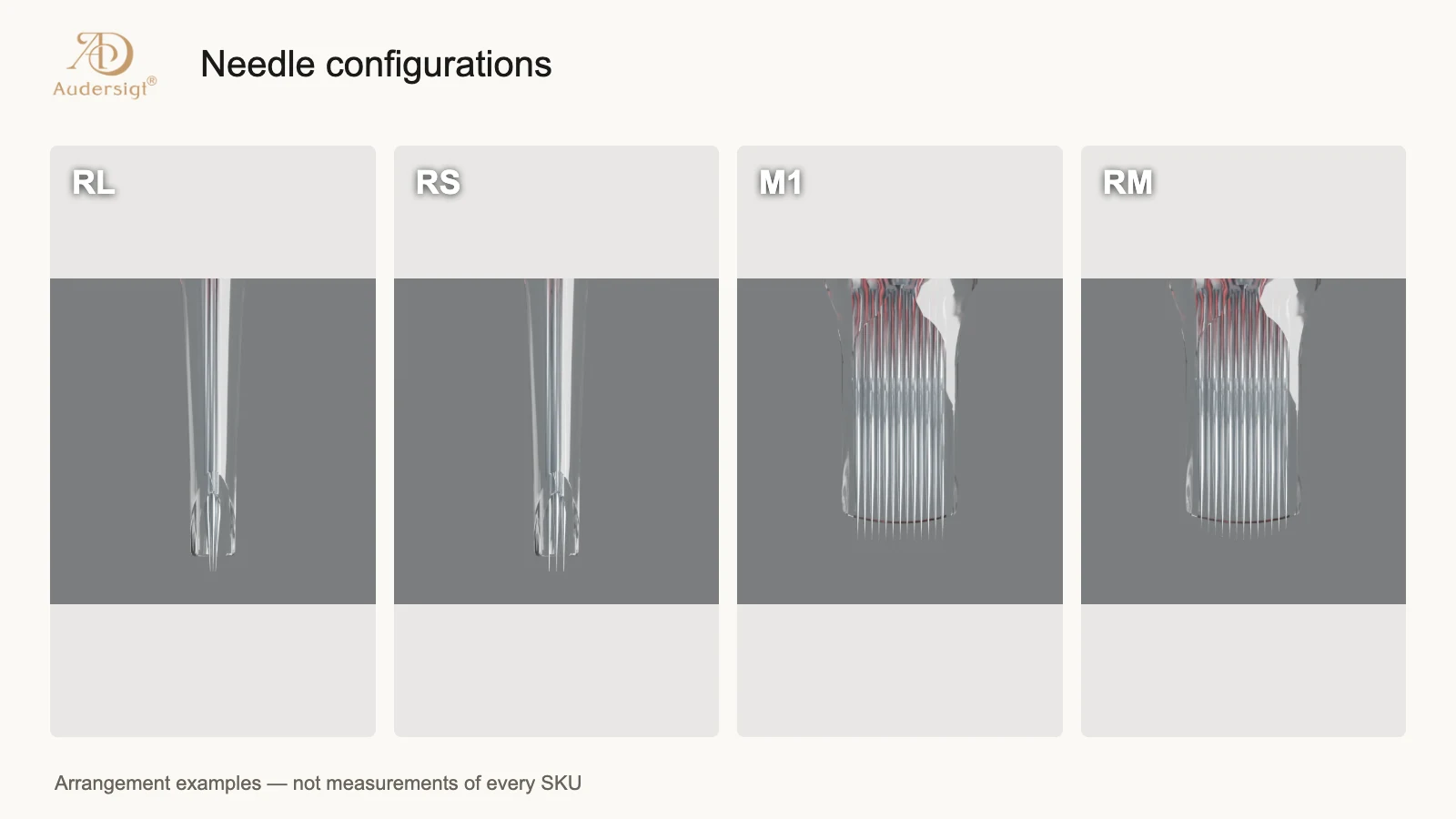
For example, FLAME 1003RL and 1005RL both use a nominal 0.30 mm diameter and a catalog-listed Long Taper; count changes from three to five. By contrast, 1207RL and 1207RS both specify seven 0.35 mm needles, and both series are confirmed as Long Taper. Their arrangement differs. Exact taper lengths in millimetres have not been verified, so do not infer identical grind geometry from that shared label.
These are catalog specifications, not performance measurements. The model illustration shows arrangement only; its depicted needle count does not describe every product option.
| Task in the design | What to compare | What to check |
|---|---|---|
| Contour or small detail | RL diameter, count and packing | Target line hierarchy, gaps, taper and series |
| Narrow shaded region | Smaller shading-group candidates | Local access and actual group shape |
| Broad transition or filled area | M1/RM and sizes within each series | Area, boundary, complete specifications |
Before adding cartridges to your order
Record the motif, intended size, specific region, desired visual role and candidate full code. Check the FLAME RL, RS, M1 or RM product page for its actual options; the available ranges differ. Boxes contain 20 cartridges. Stock and exact compatibility need confirming from the current product and equipment information.
Use the needle sizes guide for codes and parameter distinctions. The style selection overview explains how the same task can appear across different styles. Keep design references and any actual test records separate.
Frequently asked questions
Is there one best needle size for Black and Grey?
No. Start with the specific line, shadow, transition or filled area, then compare complete specifications. A style can contain several different tasks.
Does the artwork show a tested tattoo result?
No. These are original AI-assisted digital design studies. They are not photographs of tattoos, healed results or professionally tested stencils.
Can I calculate line width from needle count?
No. Count, nominal diameter, packing, taper and series describe different aspects of a cartridge. They do not provide a guaranteed finished line width.
What information should I confirm before ordering?
Confirm the brand and series, complete code, nominal diameter, count, arrangement, taper, machine/grip compatibility and box quantity. Ask for missing information rather than inferring it from shell color.
Download the three-design PDF (EN)
Original AI-assisted digital design references, not photographs of tattoos or tested stencils.
Find your next tattoo setup
Shop productsRelated Articles
Best Tattoo Stencil Printers: X6 vs T08FD
Compare the Audersigt X6 and T08FD tattoo stencil printers by paper support, connectivity, battery, controls, size, and real studio workflow.

Best Wireless Tattoo Machines: A Specification-Led Studio Guide
Compare Audersigt D2 Pro, KT088, KT108 and MAX PRO by documented stroke, battery and grip configurations, with a practical buying checklist.
Tattoo Machine Stroke Guide
Understand stroke, needle protrusion and depth, then compare machine settings, cartridges and power systems without relying on a universal setup chart.