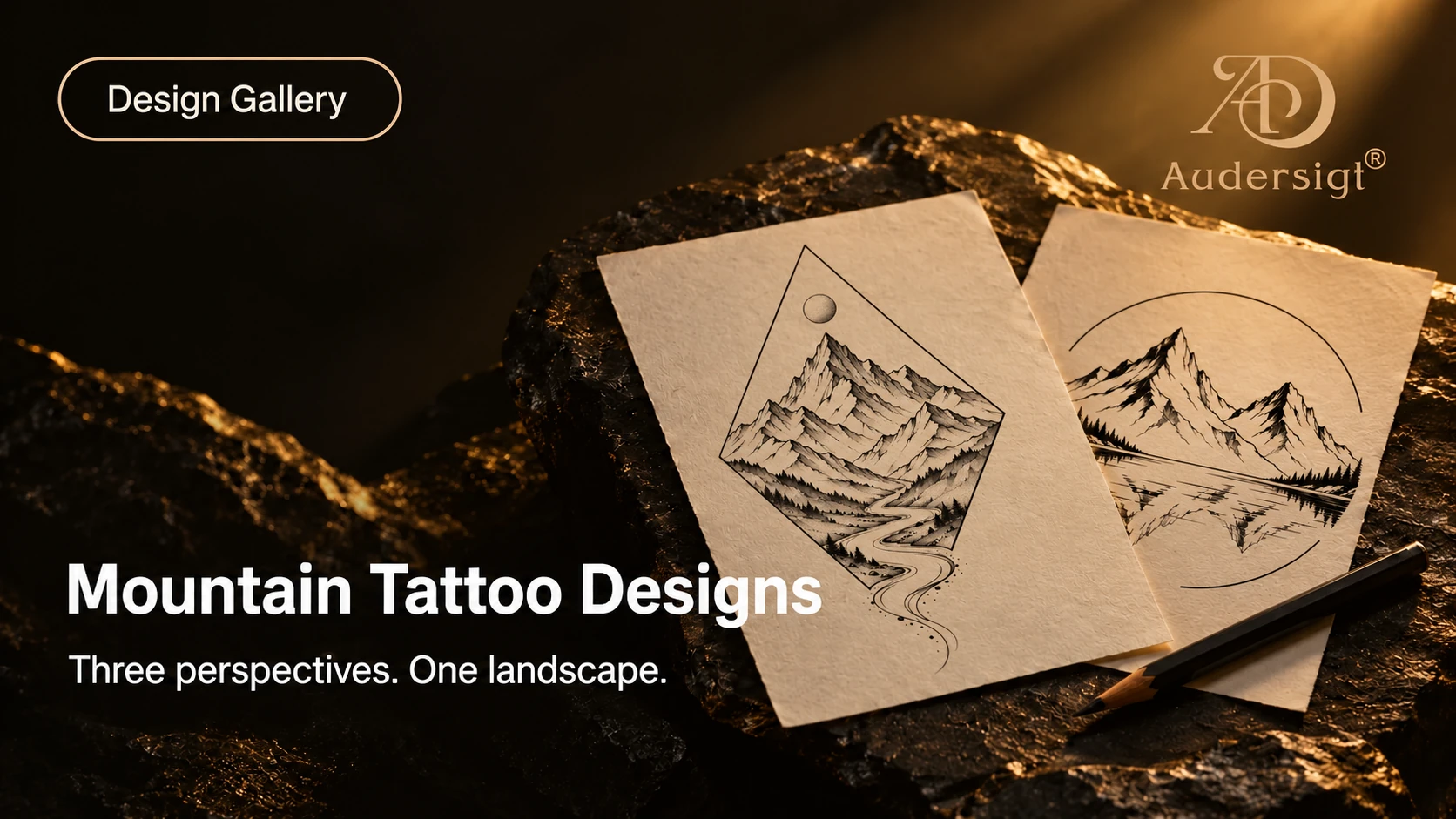
A mountain tattoo can be built around a long skyline, a tall geometric frame or a reflection across water. Those choices change the rhythm of the drawing before any fine detail is added. This gallery brings together three original mountain illustrations to help you decide which overall shape you want to develop with an artist.
Start with the silhouette. The open ridge spreads sideways, the diamond leads the eye vertically, and the lake composition balances an upper landscape with an inverted reflection. Each uses black linework and areas of shading, but each leaves space in a different way.
1. Open ridge with a rising sun
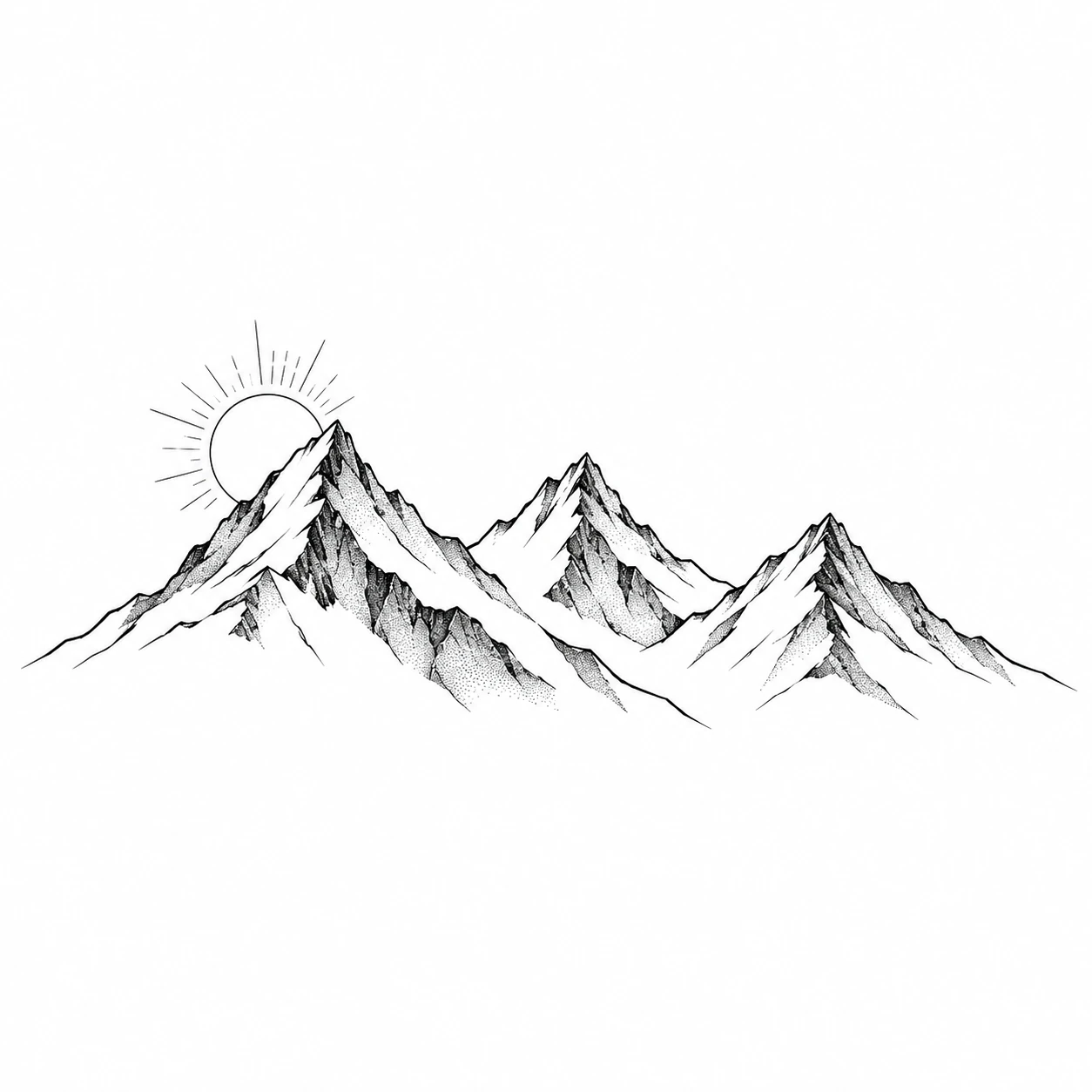
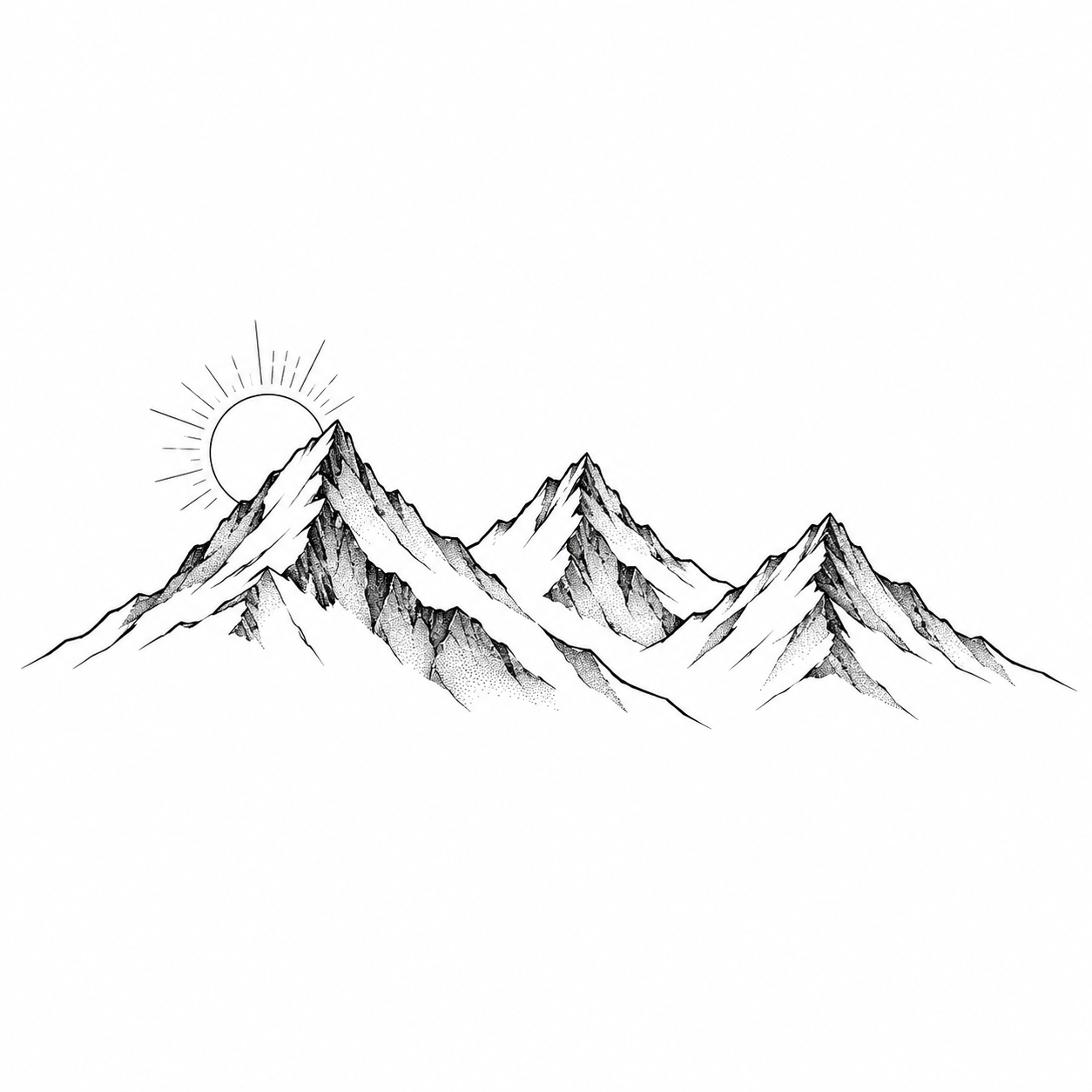
A wide skyline with an open edge. The highest peak sits toward the left, while two lower peaks carry the eye across the composition. The sun adds a second focal point without enclosing the landscape in a frame. Stippled slopes distinguish the mountain faces from the white snow shapes.
This is the starting point to discuss if you prefer a panoramic drawing. Decide whether the sun belongs in your version and how much of the rocky texture you want to retain. For a simpler adaptation, ask the artist to explore the skyline and a few major shadow shapes before adding small surface details.
Download the ridge illustration as PNG
2. Mountain valley in an open diamond
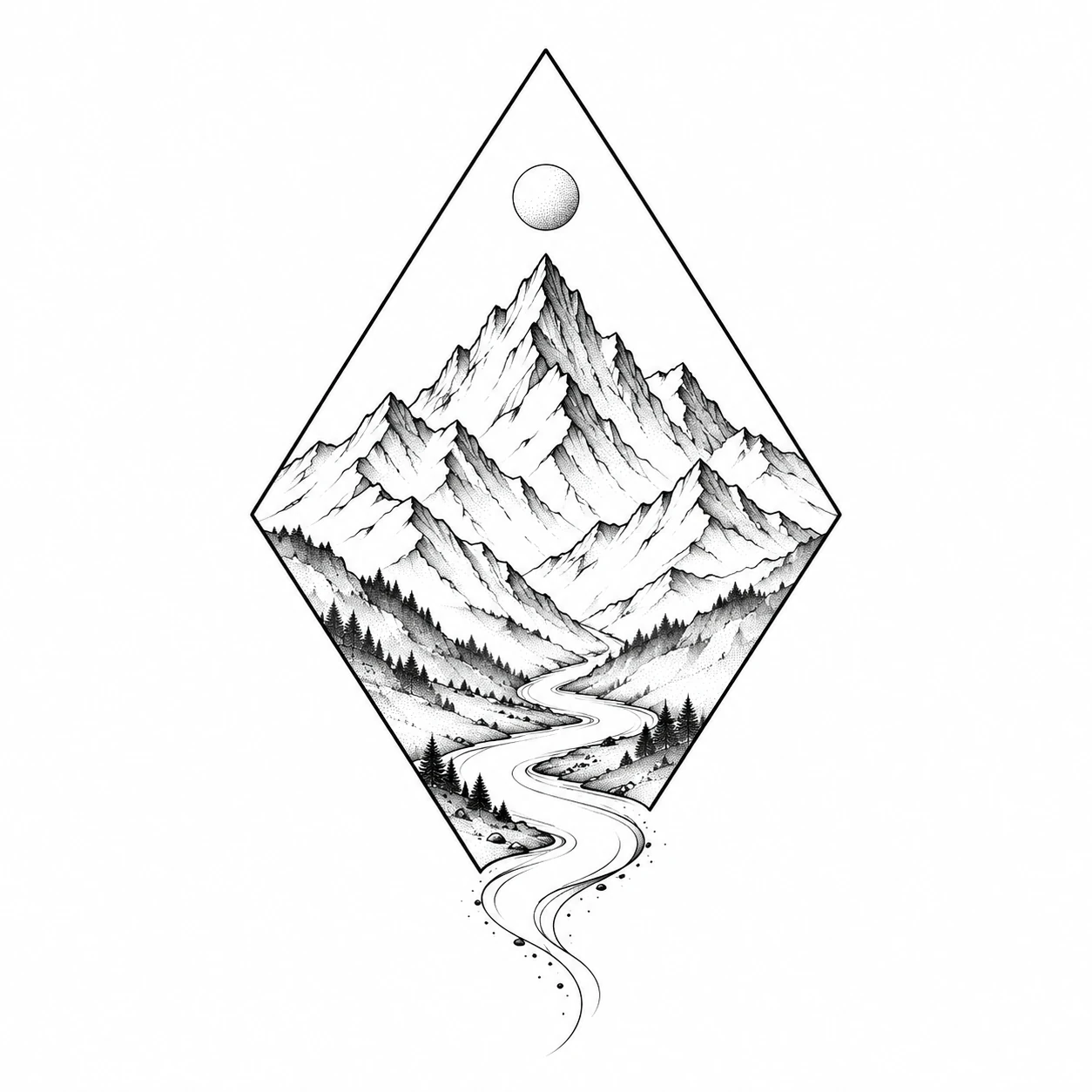
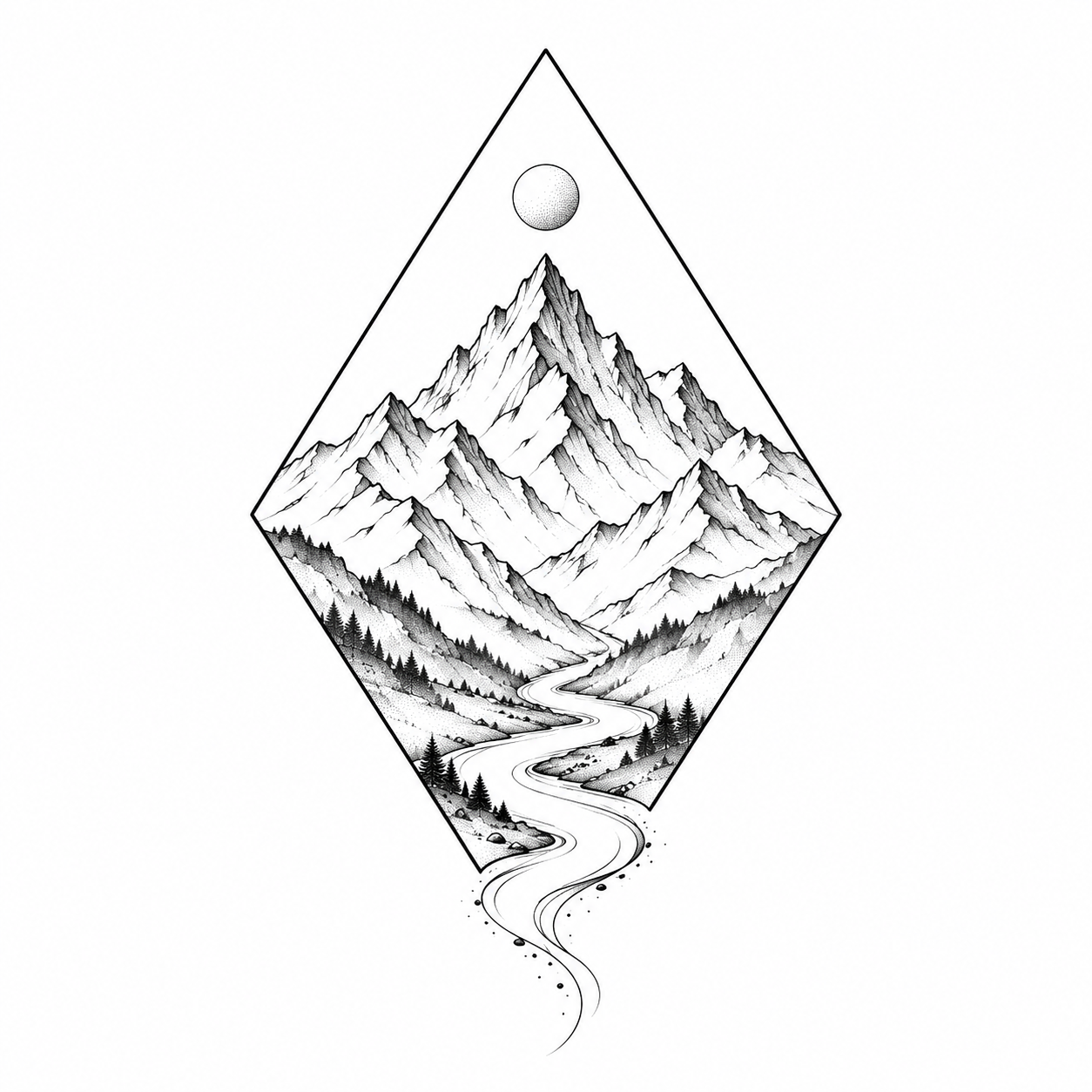
A tall frame that the river breaks through. The diamond gives this landscape a clear outer structure. Inside it, a central summit, smaller ridges and trees lead down to a winding river. The river continues beyond the lower point, so the frame does not completely close the picture.
Choose this direction for a discussion about vertical movement and the contrast between straight edges and a curved river. The forest and rock textures make it more detailed than a simple mountain outline. If you want a smaller drawing, ask which details should be removed instead of shrinking every line unchanged.
Download the diamond illustration as PNG
3. Peaks reflected in a lake
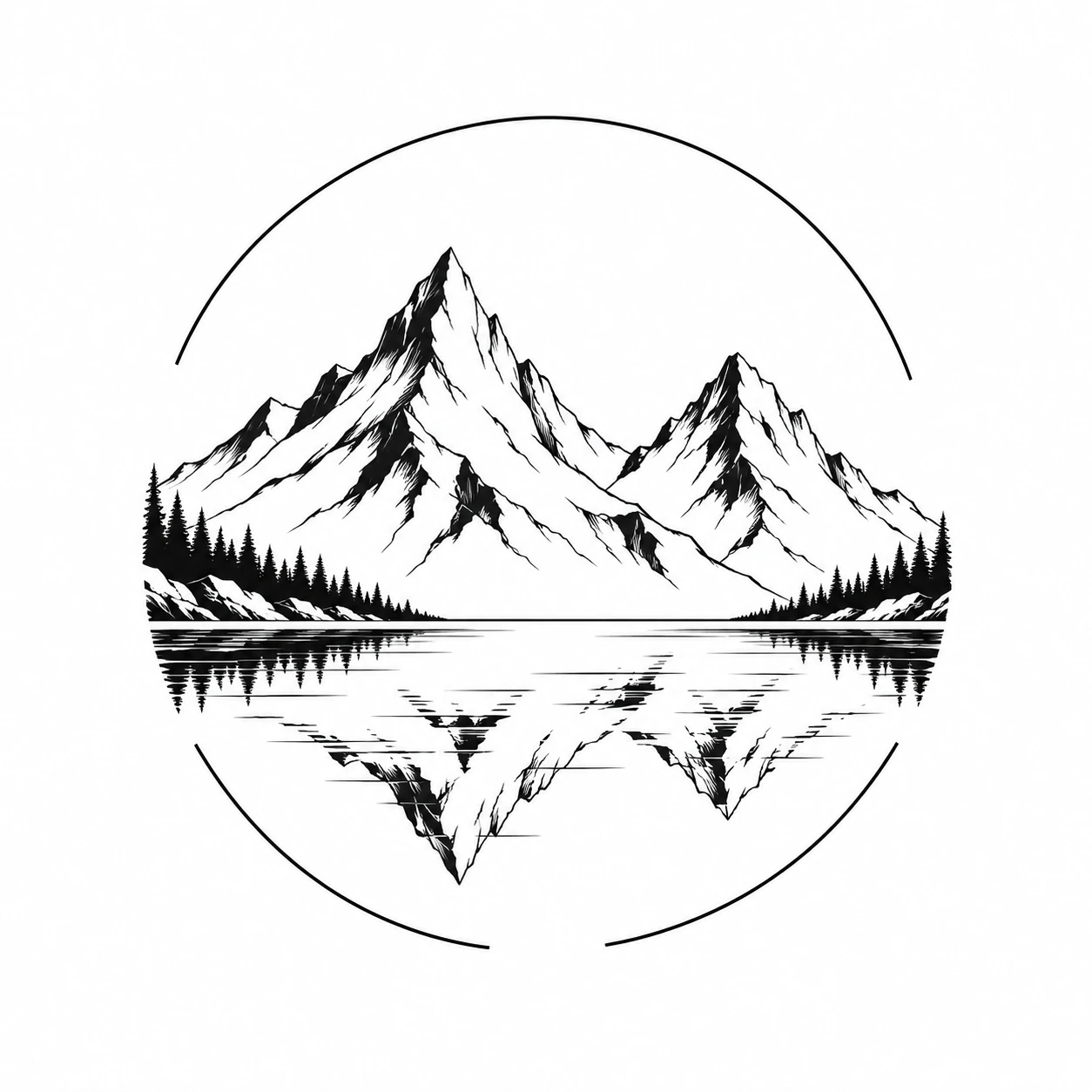
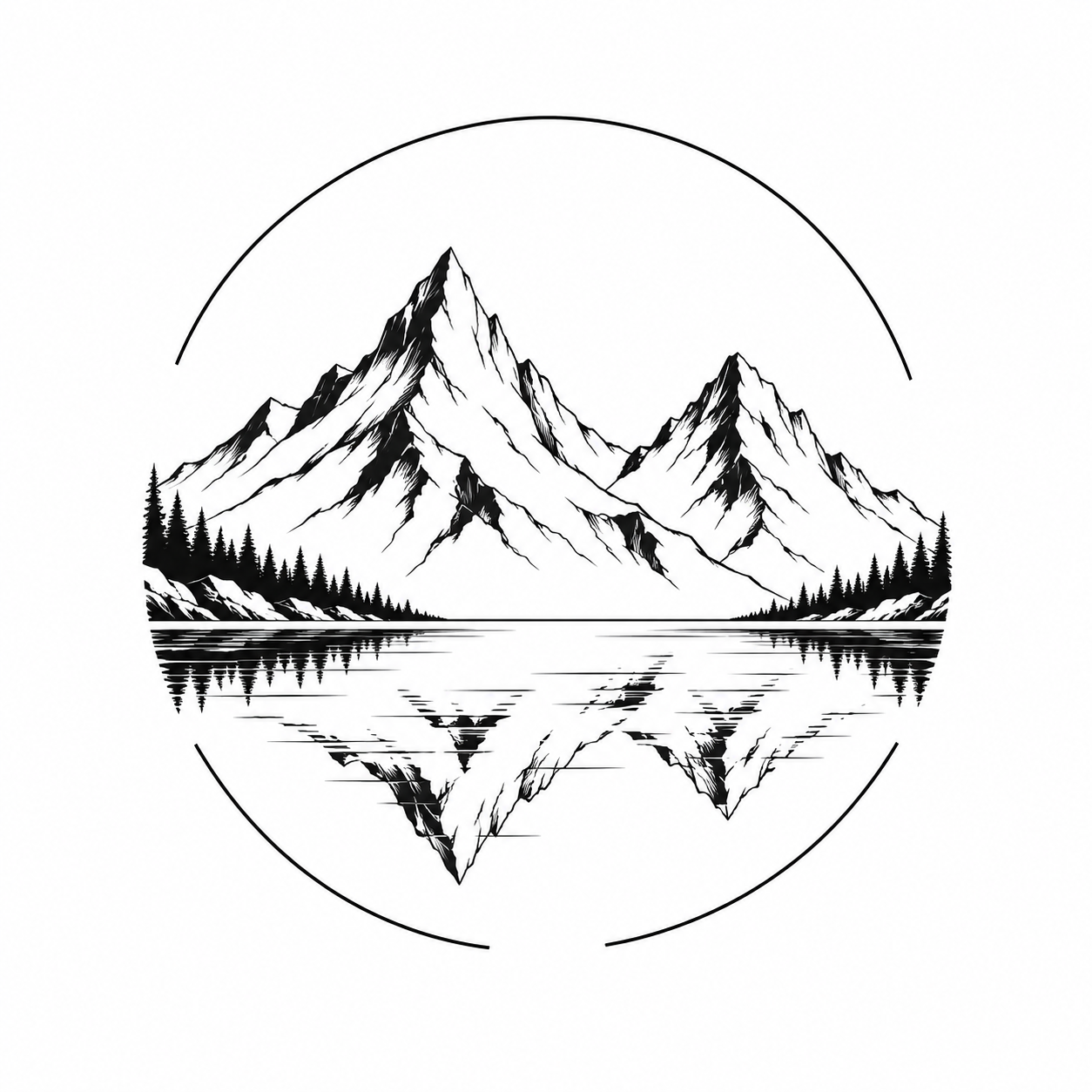
A landscape held together by its horizon. Two peaks rise above the lake; their inverted shapes and the darker tree line give the lower half visual weight. An interrupted circular outline gathers the composition without making it a solid badge.
The broad white water areas are as important as the black trees and mountain shadows. Discuss whether you want the reflection to stay detailed or become a few simpler shapes. Keep the horizon visible in any adaptation: it is the line that separates the mountain from its reflection.
Download the lake illustration as PNG
Compare the three compositions
| Design | Main direction | Detail to preserve | A useful simplification to discuss |
|---|---|---|---|
| Open ridge | Horizontal | Uneven skyline and open outer edges | Reduce slope texture while keeping the major peaks |
| Open diamond | Vertical | Straight frame and river exiting below | Remove some trees and secondary ridges |
| Lake reflection | Balanced around a horizon | Contrast between peaks, water and reflection | Use fewer reflected marks and broader white areas |
These are drawing decisions, not fixed body-placement recommendations. Take the preferred outline to your artist and discuss its proportions at the intended location. A composition that reads well on a flat page may need changes when it follows the shape of the body.
What to bring to a design consultation
Choose one main composition and write down the parts that matter to you. Is it the open skyline, the river leaving its frame or the mirrored peaks? Then note what you would change: the sun, the number of mountains, the forest or the amount of shading. This gives the artist a clearer brief than asking to combine every detail from all three drawings.
If the mountain represents a particular journey or place, bring a photograph of that location. The landscapes here are imagined compositions, not accurate drawings of a named mountain range. An artist can help decide which recognisable features belong in your own version.
For a smaller design, begin with fewer visual elements. Ask the artist to assess spacing and final size; the download dimensions do not prescribe tattoo dimensions. These drawings show ideas on paper, not healed results.
Download the reference collection
Download the three-page reference PDF in English
Download the three-page reference PDF in Spanish
Each PDF has one design per page. The individual PNG links give you the full-resolution illustration; the page uses lighter WebP previews. Save the design you prefer and add your consultation notes separately.
Explore another approach to outline and empty space in the fine-line design gallery, or compare heavier shapes in the blackwork gallery. Artists looking up equipment terminology can read the RL, RS, M1 and RM configuration guide; this gallery does not prescribe equipment settings for reproducing the drawings.
Find your next tattoo setup
Shop productsRelated Articles
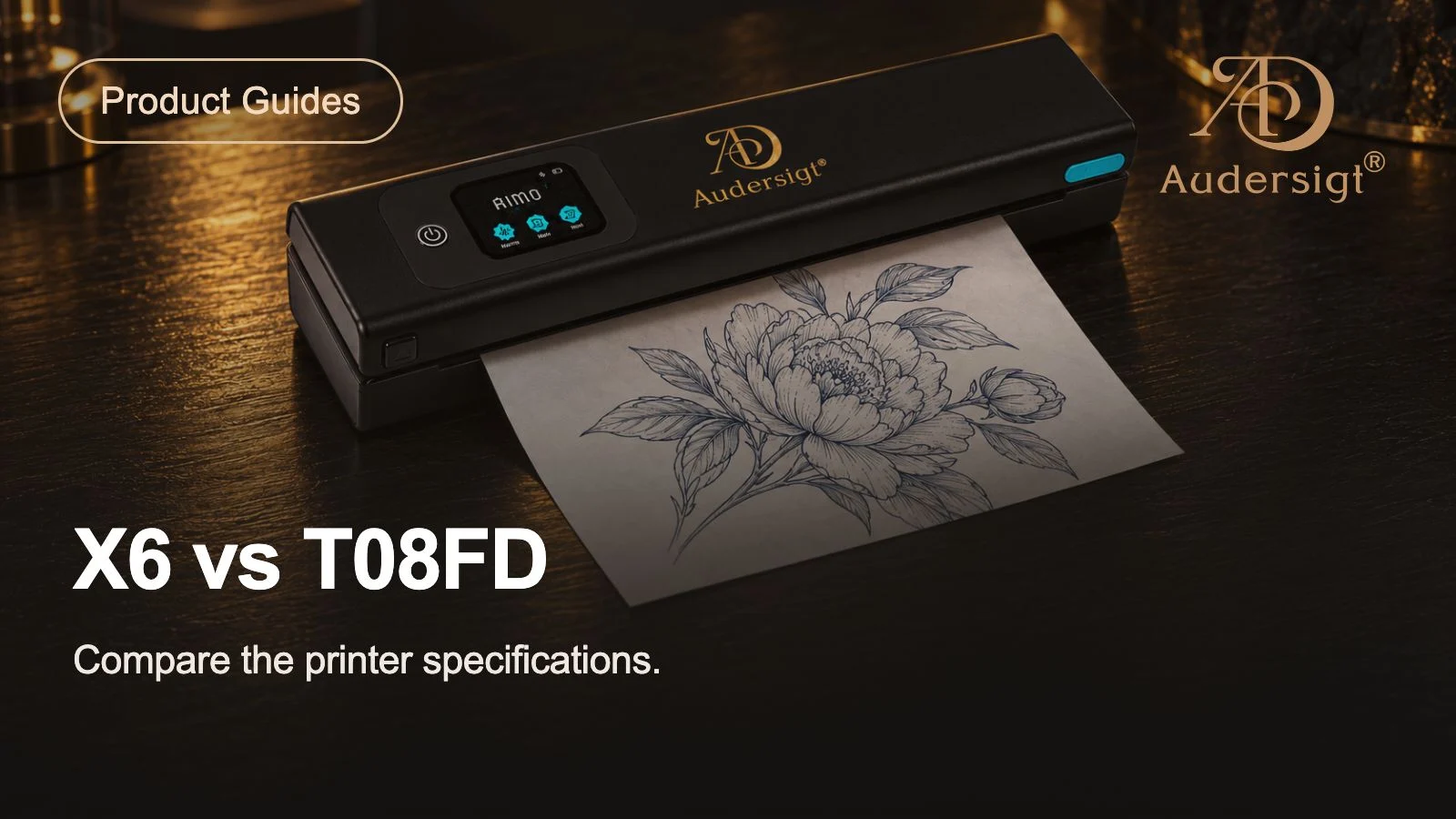
Best Tattoo Stencil Printers: X6 vs T08FD
Compare the Audersigt X6 and T08FD tattoo stencil printers by paper support, connectivity, battery, controls, size, and real studio workflow.
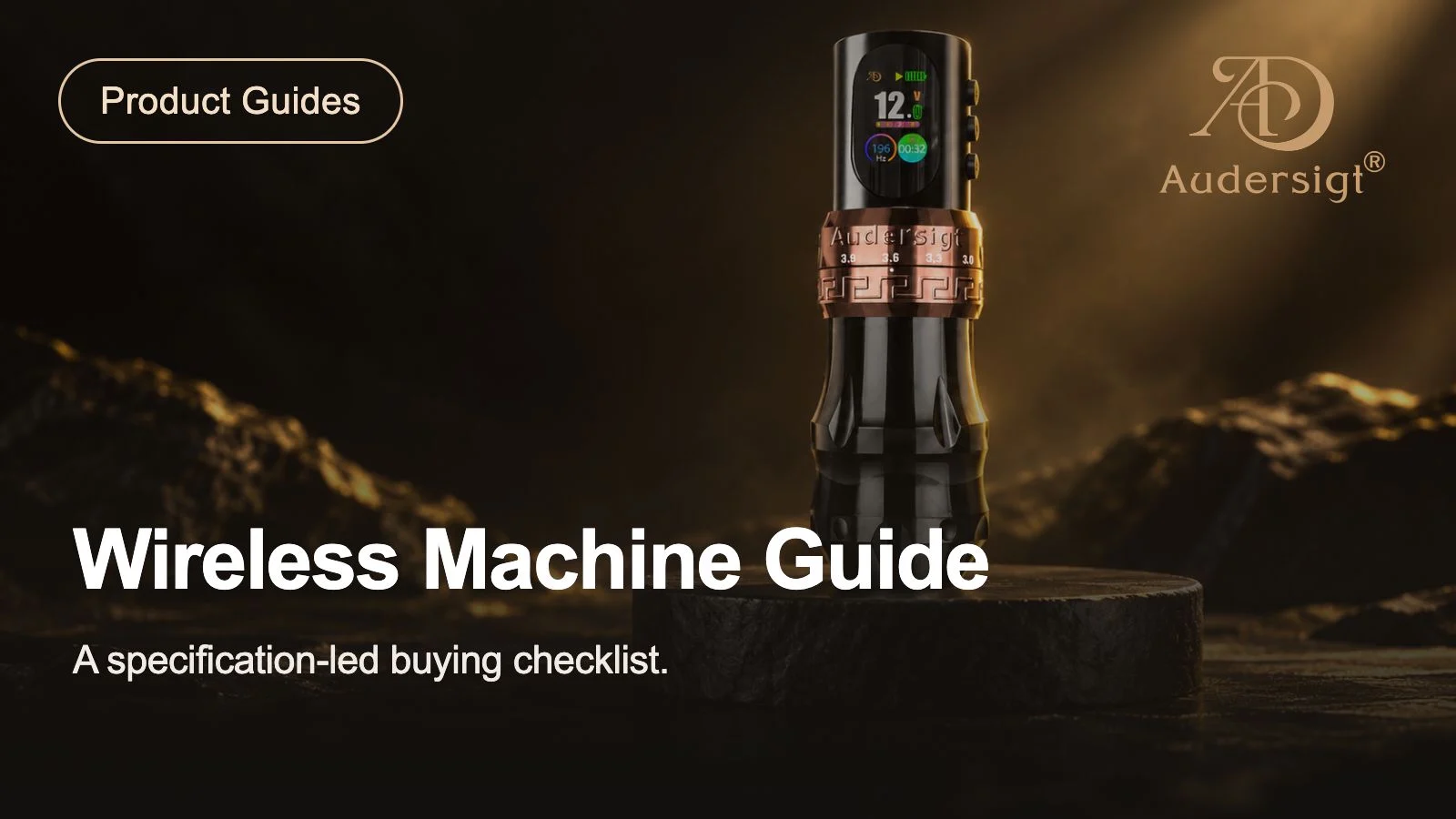
Best Wireless Tattoo Machines: A Specification-Led Studio Guide
Compare Audersigt D2 Pro, KT088, KT108 and MAX PRO by documented stroke, battery and grip configurations, with a practical buying checklist.
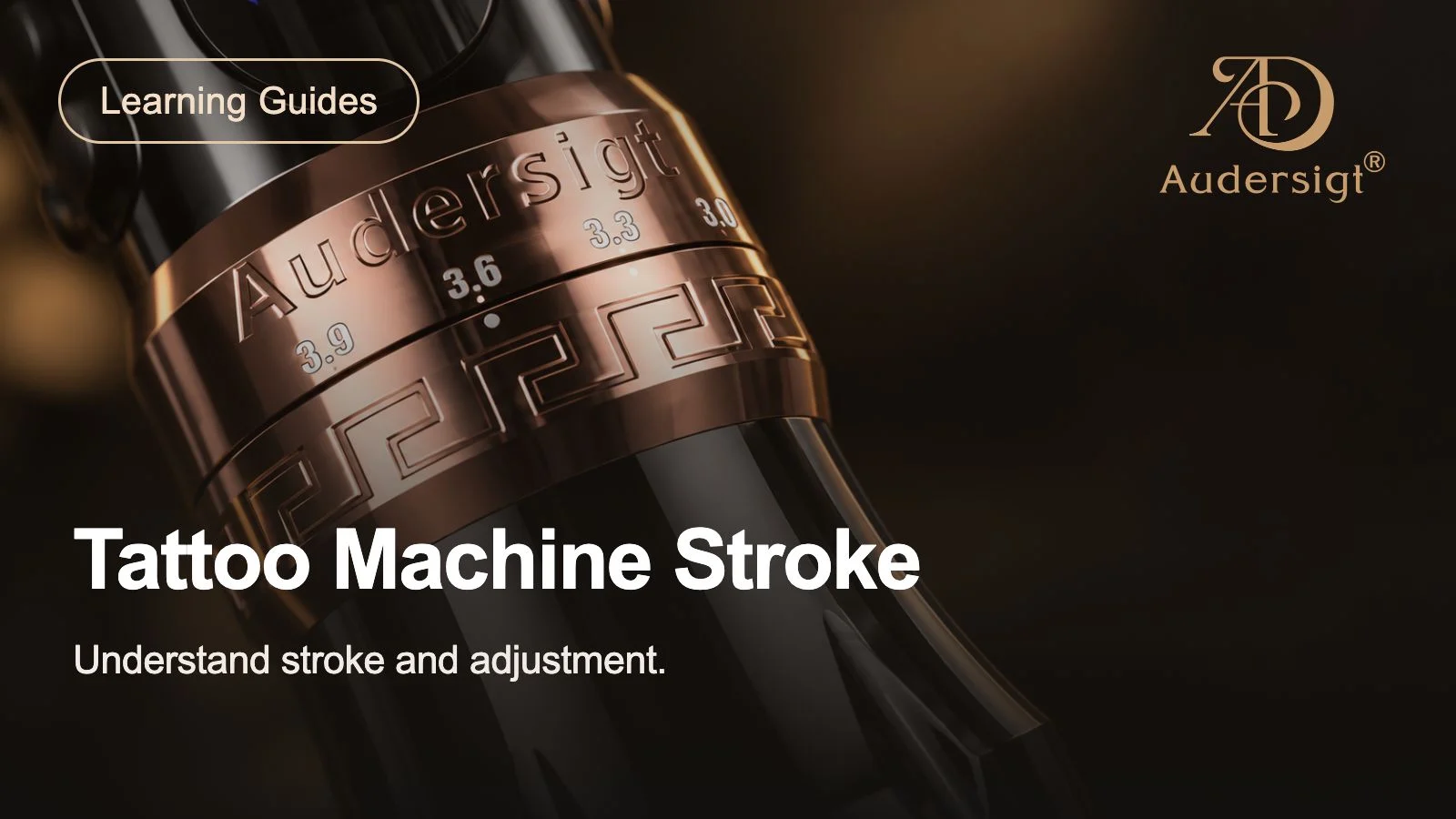
Tattoo Machine Stroke Guide
Understand stroke, needle protrusion and depth, then compare machine settings, cartridges and power systems without relying on a universal setup chart.